
MEPCO Net Metering – How Solar Panels Affect Your Electricity Bill
Solar energy is becoming a popular option for households and businesses looking to manage electricity expenses. With solar panels installed, consumers can generate their own electricity and potentially reduce the amount they purchase from the grid. MEPCO Net Metering is a topic worth understanding if you receive electricity through the Multan Electric Power Company (MEPCO) and are considering a solar installation.
The effect on your MEPCO Bill depends on how much electricity your solar system produces, how much your home consumes, the applicable billing arrangements, and any charges that remain payable. Understanding these factors can help you make informed decisions before investing in solar energy.
Understanding how solar energy affects your MEPCO Bill can help you plan your monthly electricity expenses. By monitoring solar production and grid consumption, you can better evaluate your potential savings.
What Is MEPCO Net Metering?
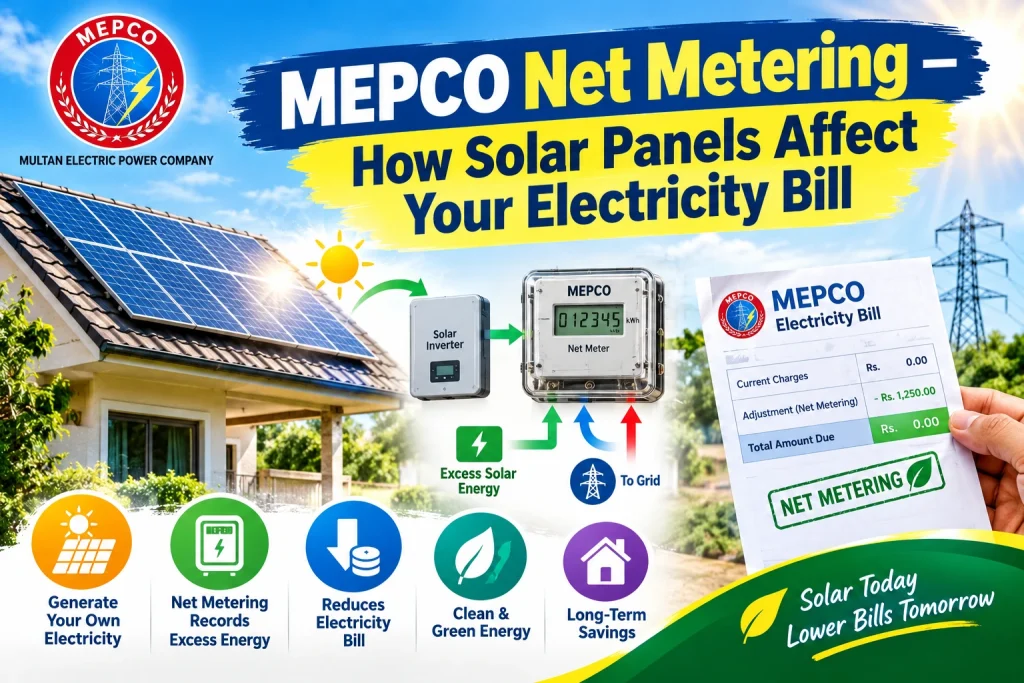
Net metering is a billing arrangement that allows eligible solar energy consumers to send surplus electricity to the distribution grid under applicable rules. When solar panels generate more power than a property needs, the excess may be exported to the grid. When solar production is insufficient, electricity can be imported from the grid.
The exact settlement method, eligibility criteria, and compensation for exported electricity depend on the regulations and agreement applicable to the consumer. Before installing a system, confirm the latest requirements with MEPCO and the relevant electricity regulator.
How Solar Panels Affect Your MEPCO Bill
Solar panels can change your electricity costs in several ways.
1. Reduced Electricity Imported From the Grid
During sunny hours, solar panels can power household appliances directly. If your system generates enough electricity, you may need to purchase fewer units from the grid. Using appliances during peak solar production can help increase the amount of solar energy consumed at home.
2. Exporting Surplus Solar Electricity
Sometimes a solar system produces more electricity than the household needs. Under an approved arrangement, eligible consumers may export this surplus to the grid. The financial benefit depends on the applicable export rate and settlement rules, so exported units should not automatically be assumed to cancel imported units at the same value.
3. Remaining Charges on the Bill
Even when solar panels reduce grid consumption, a bill may still include applicable fixed charges, taxes, adjustments, or other permitted costs. The final amount depends on the consumer’s tariff category, usage, and current billing rules.
4. Seasonal Changes in Solar Generation
Solar production changes with sunlight, weather, shading, dust, and the season. A system may generate more electricity on clear days and less during cloudy periods. Household consumption can also rise during hot weather because of air conditioners and fans.
Reviewing monthly generation and consumption helps explain why the bill can vary throughout the year.
Your MEPCO Bill may decrease when solar panels supply a large portion of your household electricity needs. However, actual savings depend on your energy usage, solar system capacity, applicable tariffs, and charges that remain payable.
Factors to Consider Before Installing Solar Panels
Before investing in a system, review these important points:
- System size: Choose a system based on your actual electricity consumption and available roof space.
- Roof conditions: Check shading, orientation, structural suitability, and maintenance access.
- Equipment quality: Compare panels, inverters, warranties, and installation standards.
- Approval requirements: Confirm the current MEPCO application process and technical requirements before exporting electricity.
- Billing arrangement: Understand the applicable import tariff, export compensation, and any charges under your agreement.
- Maintenance: Keep panels clean according to manufacturer guidance and arrange inspections when needed.
A qualified solar installer can assess your property and estimate expected generation. Ask for assumptions and projected savings rather than relying only on promotional claims.
How to Understand Your MEPCO Bill After Solar Installation
After installation and approval, compare your bill with your solar system’s monitoring data. Check the billing period, imported units, exported units where shown, applicable rates, and any additional charges. Keep copies of previous bills so you can compare changes over time.
If the bill appears incorrect, verify the meter readings and billing details first. Contact MEPCO through its official website or customer service channel if you need clarification or want to report a billing issue. Keep your reference number, consumer details, and relevant bill copies available when making an inquiry.
Official website: https://www.mepco.com.pk/
Common Misunderstandings About Net Metering
Solar panels do not always eliminate electricity bills. Savings depend on the size and performance of the system, household usage patterns, applicable charges, and the rules governing exported electricity.
Another common misunderstanding is that every exported unit has the same financial value as every imported unit. This may not be true under the applicable billing arrangement. Consumers should read their approved agreement and confirm current rules before estimating savings or calculating a payback period.
Review your MEPCO Bill every month and compare imported electricity units with your solar system’s production records. If the charges seem incorrect, contact MEPCO to request an explanation or billing review.
Conclusion
MEPCO Net Metering can help eligible consumers make better use of solar energy by allowing surplus electricity to be exported under the applicable arrangement. The impact on a MEPCO Bill depends on solar production, household consumption, grid imports and exports, and current tariffs and charges.
Before installing solar panels, confirm the latest requirements with MEPCO, compare installer estimates carefully, and understand how your electricity will be billed. With realistic expectations and a suitable system, solar energy can help households manage electricity costs more effectively.