MEPCO Tariff Rates – Complete Guide to Electricity Unit Rates and Bill Charges
MEPCO Tariff Rates are an important factor in calculating electricity bills for consumers in the Multan Electric Power Company service area. The amount you pay depends on more than simply multiplying your monthly units by one fixed rate.
Your final electricity bill can vary depending on your consumer category, tariff type, number of units consumed, applicable fixed charges, taxes, Fuel Charges Adjustment (FCA), quarterly or periodic adjustments, and other approved charges.
The Government-notified MEPCO tariff schedule was updated with effect from 1 January 2026, while NEPRA continues to issue tariff adjustments and decisions that can affect the final payable amount on consumer bills. Therefore, consumers should always check the latest official tariff information and their own bill for the applicable rate. (NEPRA)
What Are MEPCO Tariff Rates?
A tariff rate is the approved price structure used to calculate electricity charges for a particular consumer category.
MEPCO consumers are not all charged under one identical unit rate. The applicable tariff can depend on factors such as:
- Consumer category
- Type of electricity connection
- Number of units consumed
- Sanctioned load
- Protected or non-protected status where applicable
- Time of Use (TOU) status
- Peak and off-peak consumption
- Government subsidies or tariff rationalization
- Applicable taxes and adjustments
This is why two consumers using a similar number of units may sometimes receive different bill amounts.
MEPCO Tariff Categories
MEPCO electricity tariffs are generally structured according to different consumer categories.
1. Domestic Consumers
Domestic tariffs generally apply to residential electricity connections.
The bill may depend on factors such as:
- Monthly units consumed
- Applicable consumer category
- Protected or non-protected status
- TOU or non-TOU classification
- Fixed charges
- Applicable taxes and adjustments
2. Commercial Consumers
Commercial tariffs generally apply to shops, offices, markets, and other commercial activities.
The applicable rate can depend on the commercial tariff category and electricity demand.
3. Industrial Consumers
Industrial consumers may have different tariff structures depending on:
- Voltage level
- Contracted or sanctioned load
- Demand requirements
- Peak and off-peak consumption
- Applicable industrial tariff category
4. Agricultural Consumers
Agricultural electricity connections can also have separate tariff categories based on the applicable schedule and connection type.
MEPCO Domestic Tariff Rates
For domestic consumers, electricity charges are commonly linked to the applicable tariff category and units consumed.
Instead of assuming one fixed rate for every unit, consumers should understand that electricity pricing may involve different slabs or categories.
For example, your monthly electricity consumption may fall within different consumption ranges, and the applicable bill calculation depends on the tariff notified for your category.
The latest MEPCO tariff notification should always be used for exact current rates because the tariff schedule and applicable adjustments can change. The MEPCO tariff notification issued in January 2026 took effect from 1 January 2026. (NEPRA)
Protected and Non-Protected Consumers
Domestic electricity consumers may be classified according to the applicable tariff rules.
Protected Consumers
A protected category may receive a different applicable tariff treatment under the approved schedule and relevant government policy.
Non-Protected Consumers
Consumers outside the protected category may be billed according to the applicable non-protected tariff structure.
Because consumer classification can affect the bill, it is important to check the tariff category printed on your own MEPCO bill rather than relying only on a general unit-rate table.
MEPCO TOU Tariff Rates
Some electricity consumers may fall under a Time of Use (TOU) tariff.
Under a TOU structure, electricity consumption can be divided into:
- Peak Hours
- Off-Peak Hours
Different rates may apply to electricity consumed during these periods, depending on the applicable tariff category.
If your bill shows a TOU tariff or separate peak and off-peak readings, check your bill carefully to understand how consumption is being measured.
Why Does My MEPCO Bill Change Every Month?
Your electricity bill can increase or decrease even if your household routine seems similar.
Several factors can affect the final amount.
1. Units Consumed
Higher electricity consumption generally results in higher variable charges.
Appliances such as air conditioners, electric water heaters, irons, pumps, and other high-load equipment can significantly affect monthly units.
2. Tariff Category
The applicable rate depends on the consumer category shown on the bill.
A domestic, commercial, industrial, agricultural, or TOU connection may have a different pricing structure.
3. Fuel Charges Adjustment
Fuel-related adjustments may affect the final payable amount depending on the relevant period and applicable NEPRA decisions.
NEPRA publishes FCA decisions for ex-WAPDA DISCOs as part of the regulatory tariff process. (NEPRA)
4. Quarterly or Periodic Adjustments
The final electricity bill may also reflect approved periodic or quarterly tariff adjustments.
NEPRA’s 2026 tariff records include periodic adjustment decisions for ex-WAPDA DISCOs. (NEPRA)
5. Taxes and Government Charges
Your final bill can include applicable government taxes, duties, levies, and other charges.
These charges are separate from the basic electricity units charge.
6. Fixed Charges
Depending on the applicable tariff category, fixed charges may also apply.
For some domestic consumer categories, fixed charges can be linked to sanctioned load or applicable demand rules. The 2026 tariff-rationalization documentation specifically addresses fixed-charge treatment for non-TOU and TOU domestic consumers. (NEPRA)
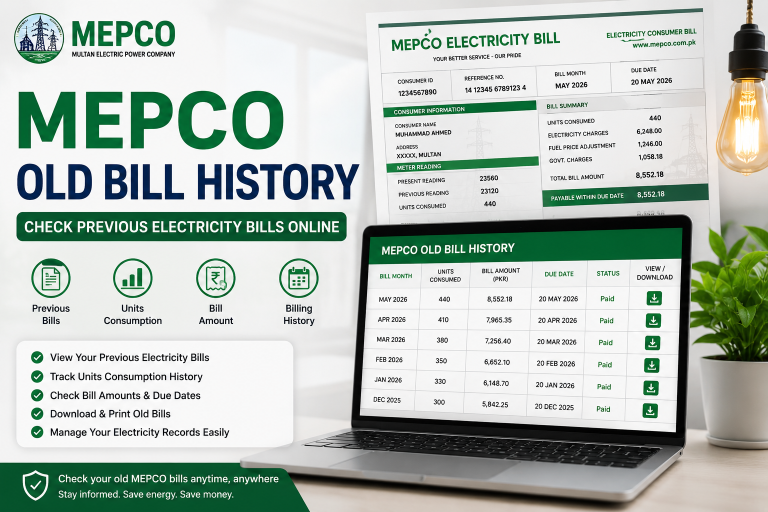
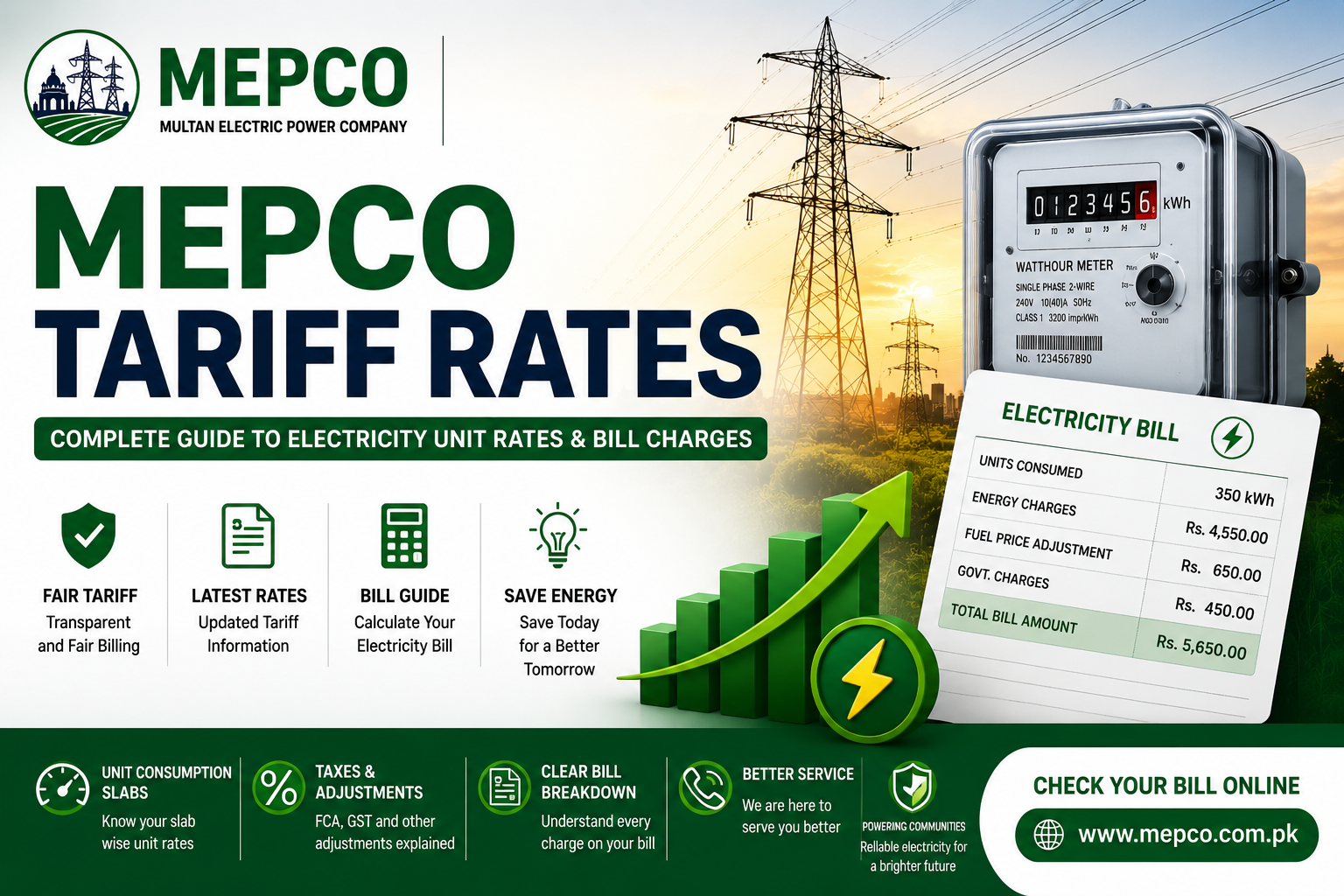
Understanding MEPCO Electricity Bill Components
A MEPCO bill may contain several components.
| Bill Component | What It Means |
|---|---|
| Units Consumed | Electricity used during the billing period |
| Energy Charges | Charges based on applicable electricity consumption rates |
| Fixed Charges | Charges that may apply according to tariff rules |
| FCA | Fuel Charges Adjustment, when applicable |
| Periodic Adjustment | Approved quarterly or periodic tariff adjustments, when applicable |
| Taxes and Duties | Government-imposed charges where applicable |
| Arrears | Any unpaid amount from a previous bill |
| Late Payment Charges | Charges that may apply after the due date |
The exact items on your bill can vary according to your tariff category and applicable regulations.
How to Check Your MEPCO Tariff Category
You can usually find important tariff-related information on your electricity bill.
Look for details such as:
- Tariff category
- Consumer type
- Meter type
- Reference Number
- Customer ID
- Units consumed
- Sanctioned load
- Peak and off-peak readings, if applicable
Understanding your own bill is the best starting point for identifying which tariff structure applies to your connection.
How to Estimate Your MEPCO Electricity Bill
A simplified estimate can be made by following these steps:
Step 1: Check Your Monthly Units
Find the total number of units consumed during the billing period.
Step 2: Identify Your Tariff Category
Check the tariff category printed on your MEPCO bill.
Step 3: Check Applicable Unit Charges
Use the latest official tariff schedule for your specific category.
Step 4: Add Fixed Charges
Include applicable fixed charges where required.
Step 5: Consider Adjustments
Include any applicable FCA or periodic tariff adjustments.
Step 6: Add Taxes and Other Charges
Apply the relevant taxes, duties, and government charges shown on the bill.
Because adjustments can change over time, an estimate may not always match the final bill exactly.
Why You Should Not Rely on an Old MEPCO Unit Rate Table
Many websites publish electricity unit-rate tables that may become outdated.
This can create problems because:
- Tariffs may be revised
- Government notifications may change applicable rates
- Subsidy treatment may change
- FCA can vary by billing period
- Quarterly or periodic adjustments can be added
- Fixed charges may differ by category
For this reason, consumers should verify important calculations against the latest official tariff schedule and their own electricity bill. NEPRA’s tariff pages continue to publish MEPCO-related notifications and adjustment decisions. (NEPRA)
How to Reduce Your MEPCO Electricity Bill
While tariff rates are set through the applicable regulatory and government process, consumers can reduce unnecessary electricity usage.
Use Energy-Efficient Appliances
Energy-efficient appliances can reduce monthly electricity consumption.
Use LED Lighting
LED bulbs generally use less electricity than traditional lighting technologies.
Manage Air Conditioner Usage
Avoid unnecessarily low temperature settings and keep filters clean.
Turn Off Unused Appliances
Switch off lights, fans, electronics, and other appliances when they are not needed.
Avoid Unnecessary Heavy Loads
Try not to operate multiple high-consumption appliances unnecessarily at the same time.
Monitor Monthly Units
Compare your current units with previous bills to identify unusual increases.
Frequently Asked Questions About MEPCO Tariff Rates
What are MEPCO tariff rates?
MEPCO tariff rates are the approved electricity pricing structures used to calculate charges for different consumer categories.
Is there one fixed MEPCO unit rate for everyone?
No. The applicable rate can depend on consumer category, tariff type, consumption level, TOU status, and other applicable rules.
Why is my MEPCO bill higher than expected?
Your bill may be affected by higher units, tariff category, fixed charges, FCA, periodic adjustments, taxes, arrears, or other applicable charges.
How can I check my tariff category?
Check your MEPCO electricity bill for the tariff or consumer category details.
What is FCA on a MEPCO bill?
FCA means Fuel Charges Adjustment. It can affect the payable amount according to applicable regulatory decisions.
Do TOU consumers have different rates?
TOU consumers may have separate peak and off-peak consumption readings and applicable rates under the relevant tariff schedule.
Where can I verify the latest MEPCO tariff?
You should check the latest tariff notifications and decisions published by NEPRA. (NEPRA)
Conclusion
MEPCO Tariff Rates are not simply one price per electricity unit. Your final electricity bill depends on your consumer category, consumption, applicable tariff structure, fixed charges, taxes, and approved adjustments.
The MEPCO tariff schedule was updated through a notification effective from 1 January 2026, and later regulatory adjustments may also affect billing components. Therefore, always check your own bill and the latest official NEPRA tariff information when calculating or comparing current electricity costs. (NEPRA)
The best way to manage your MEPCO bill is to understand your tariff category, monitor your monthly units, and verify current rates from official sources.