MEPCO Peak Hours – Complete Guide to Peak Time, Schedule & Energy Saving Tips
MEPCO Peak Hours are the periods of the day when electricity demand is at its highest. During these hours, many homes, businesses, and industries use electricity at the same time, increasing pressure on the power system.
Understanding your applicable peak hours can be especially useful for consumers on a Time of Use (TOU) tariff, where electricity used during peak and off-peak periods may be charged differently. NEPRA’s published TOU schedule for MEPCO and other DISCO consumers uses seasonal time periods. (NEPRA)
In this guide, you will learn about MEPCO peak hours, off-peak hours, why peak demand matters, and practical ways to manage electricity usage.
What Are MEPCO Peak Hours?
Peak hours are specific periods when electricity demand on the power system is relatively high.
Demand often increases during the evening because many consumers may be using:
- Air conditioners
- Lights
- Electric irons
- Water pumps
- Washing machines
- Kitchen appliances
- Commercial equipment
For eligible TOU tariff consumers, the timing of electricity consumption can affect how units are charged.
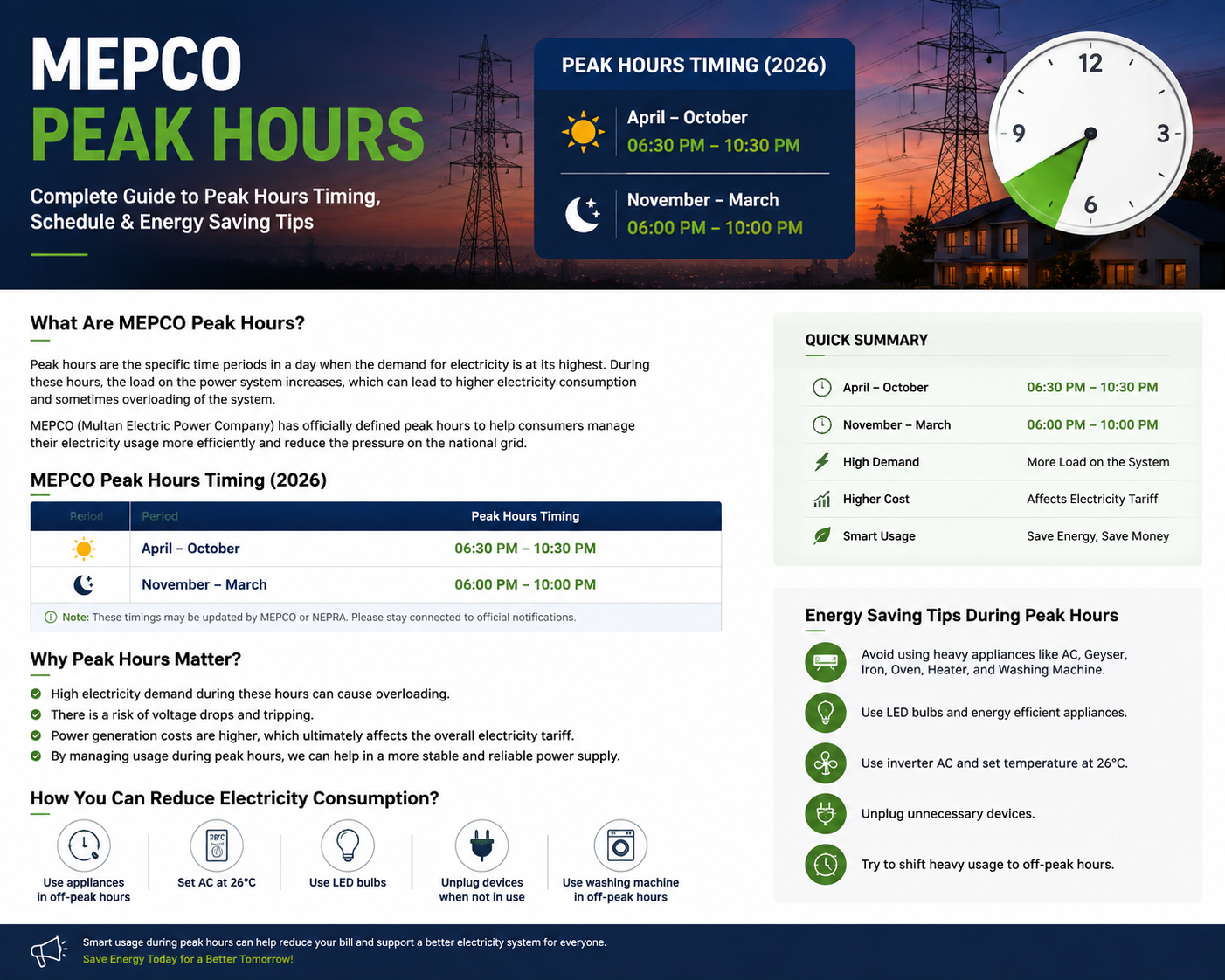
MEPCO Peak Hours Timing
According to the seasonal TOU peak and off-peak schedule published in NEPRA tariff documentation, the applicable peak periods are:
| Period | Peak Hours |
|---|---|
| December – February | 5:00 PM – 9:00 PM |
| March – May | 6:00 PM – 10:00 PM |
| June – August | 7:00 PM – 11:00 PM |
| September – November | 6:00 PM – 10:00 PM |
The remaining 20 hours of the day are off-peak hours under this schedule. Consumers should check their current tariff category and latest official MEPCO/NEPRA information because tariff applicability can differ by connection type. (NEPRA)
MEPCO Peak Hours and Off-Peak Hours
The difference is simple:
Peak Hours
Peak hours are periods of higher electricity demand. For consumers on applicable TOU tariffs, electricity consumption during these hours may have a different rate from off-peak consumption.
Off-Peak Hours
Off-peak hours are the remaining hours outside the applicable peak period.
If your tariff allows for time-based pricing, shifting flexible electricity usage outside peak periods may help manage your electricity costs.
Why Are MEPCO Peak Hours Important?
Peak hours are important because electricity demand is not the same throughout the day.
When thousands or millions of consumers use high-load appliances simultaneously, the overall demand on the electricity system can increase.
Managing consumption during busy periods can help with:
- Reducing unnecessary system demand
- Improving electricity usage habits
- Managing high-load appliances
- Planning flexible household activities
- Supporting more balanced electricity consumption
For eligible TOU consumers, it can also help them understand when their electricity usage may fall into peak or off-peak billing periods. (NEPRA)
Which Appliances Use the Most Electricity During Peak Hours?
Some appliances can consume significant amounts of electricity.
Consider managing the use of:
Air Conditioners
ACs can significantly increase household electricity consumption, especially during hot weather.
If possible, use efficient temperature settings and avoid unnecessary cooling.
Electric Iron
Ironing can often be moved to another time of day.
Water Pump
Where practical, water pumping can be scheduled outside the applicable peak period.
Washing Machine
Washing clothes can often be shifted to a more convenient off-peak period.
Water Heater
Electric water heaters can consume considerable electricity.
High-Power Kitchen Appliances
Some electric kitchen appliances can also add to household demand when used together.
How to Reduce Electricity Usage During MEPCO Peak Hours
You do not need to turn off everything in your home. Small changes can make electricity usage more efficient.
1. Shift Flexible Tasks
Try scheduling activities such as:
- Washing clothes
- Ironing
- Water pumping
- Charging batteries and devices
outside the applicable peak period when practical.
2. Use Energy-Efficient Appliances
Energy-efficient appliances can help reduce unnecessary electricity consumption.
Consider:
- LED bulbs
- Energy-efficient fans
- Efficient inverter appliances
- Energy-efficient air conditioners
3. Manage Your Air Conditioner
If you use an AC:
- Avoid extremely low temperature settings.
- Keep doors and windows closed while cooling.
- Clean filters regularly.
- Use appropriate temperature settings.
- Avoid running multiple ACs unnecessarily.
4. Turn Off Unused Appliances
Many devices continue consuming electricity when left running unnecessarily.
Switch off:
- Unused lights
- TVs
- Computers
- Chargers
- Extra fans
- Other unnecessary appliances
5. Avoid Using Multiple Heavy Appliances Together
Try not to run several high-load appliances simultaneously unless necessary.
For example, avoid using the AC, iron, water heater, washing machine, and water pump all at the same time when their use can be scheduled differently.
Does Peak Hour Usage Increase Your Electricity Bill?
This depends on your consumer category and applicable tariff.
For consumers with an applicable Time of Use (TOU) tariff, electricity used during designated peak and off-peak periods can be billed differently.
However, not every consumer is necessarily billed under the same time-based tariff structure. Your electricity bill and consumer category should be checked to understand the tariff applicable to your connection. (NEPRA)
MEPCO Peak Hours for Residential Consumers
Residential electricity consumers should first check whether their connection is subject to a TOU or time-based tariff.
For many households, reducing unnecessary electricity consumption remains beneficial regardless of the exact tariff structure.
Good habits include:
- Switching off unnecessary lights.
- Using LED bulbs.
- Managing AC usage.
- Avoiding unnecessary standby consumption.
- Using heavy appliances more efficiently.
MEPCO Peak Hours for Commercial Consumers
Commercial consumers may use significant electricity for:
- Lighting
- Cooling
- Refrigeration
- Machinery
- Computers
- Pumps
- Other equipment
Businesses that have an applicable TOU tariff may benefit from planning flexible energy-intensive activities around the relevant peak and off-peak schedule.
How to Check Whether You Have a TOU Meter or Tariff
Check your electricity bill for details about your consumer category, tariff and meter arrangement.
If you are unsure whether peak and off-peak rates apply to your connection, verify the information through official MEPCO channels or the latest tariff documentation before making billing decisions.
Smart Electricity Saving Tips
Here are some simple tips for better electricity management:
Use LED Bulbs
LED bulbs generally consume less electricity than traditional lighting options.
Maintain Your Appliances
Clean and properly maintained appliances can operate more efficiently.
Avoid Unnecessary Standby Power
Turn off devices that are not being used.
Plan Heavy Appliance Usage
Schedule flexible high-load activities at suitable times.
Use AC Efficiently
Avoid unnecessarily low temperature settings and maintain your AC regularly.
Monitor Your Monthly Units
Check your electricity consumption regularly so you can identify unusual increases.
Frequently Asked Questions About MEPCO Peak Hours
What are MEPCO peak hours?
MEPCO peak hours refer to designated periods when electricity demand is high and, for applicable TOU tariff consumers, electricity usage may be charged differently from off-peak consumption.
How long are peak hours?
Under the published seasonal TOU schedule, the peak period is generally 4 hours per day, while the remaining 20 hours are off-peak. (NEPRA)
What are the peak hours from December to February?
The published seasonal schedule lists:
5:00 PM to 9:00 PM
What are the peak hours from March to May?
The published seasonal schedule lists:
6:00 PM to 10:00 PM
What are the peak hours from June to August?
The published seasonal schedule lists:
7:00 PM to 11:00 PM
What are the peak hours from September to November?
The published seasonal schedule lists:
6:00 PM to 10:00 PM
Should I avoid using heavy appliances during peak hours?
If your connection is on an applicable TOU tariff, shifting flexible high-load activities outside peak periods may help manage time-based electricity costs. Regardless of tariff type, reducing unnecessary simultaneous heavy usage can improve energy efficiency.
Conclusion
Understanding MEPCO Peak Hours can help consumers make smarter decisions about electricity usage.
For connections subject to the applicable TOU tariff, the seasonal peak period can affect how electricity consumption is charged. The current published schedule should always be checked against official MEPCO and NEPRA information before making important billing decisions. (NEPRA)
By using electricity efficiently, avoiding unnecessary appliance usage, and scheduling flexible high-load activities intelligently, consumers can develop better energy-saving habits.
Smart electricity usage is not only about using less electricity—it is also about using it more efficiently.